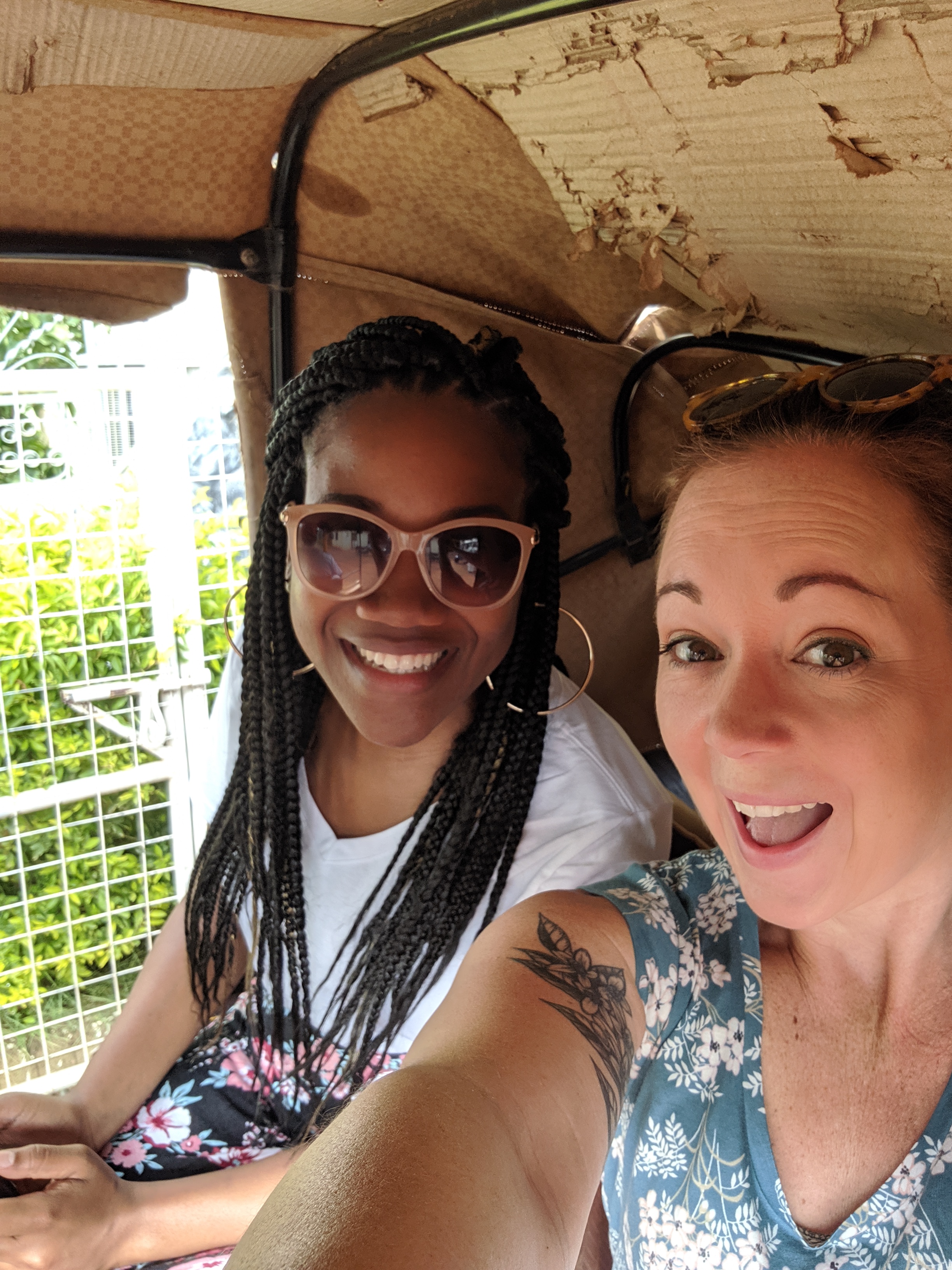
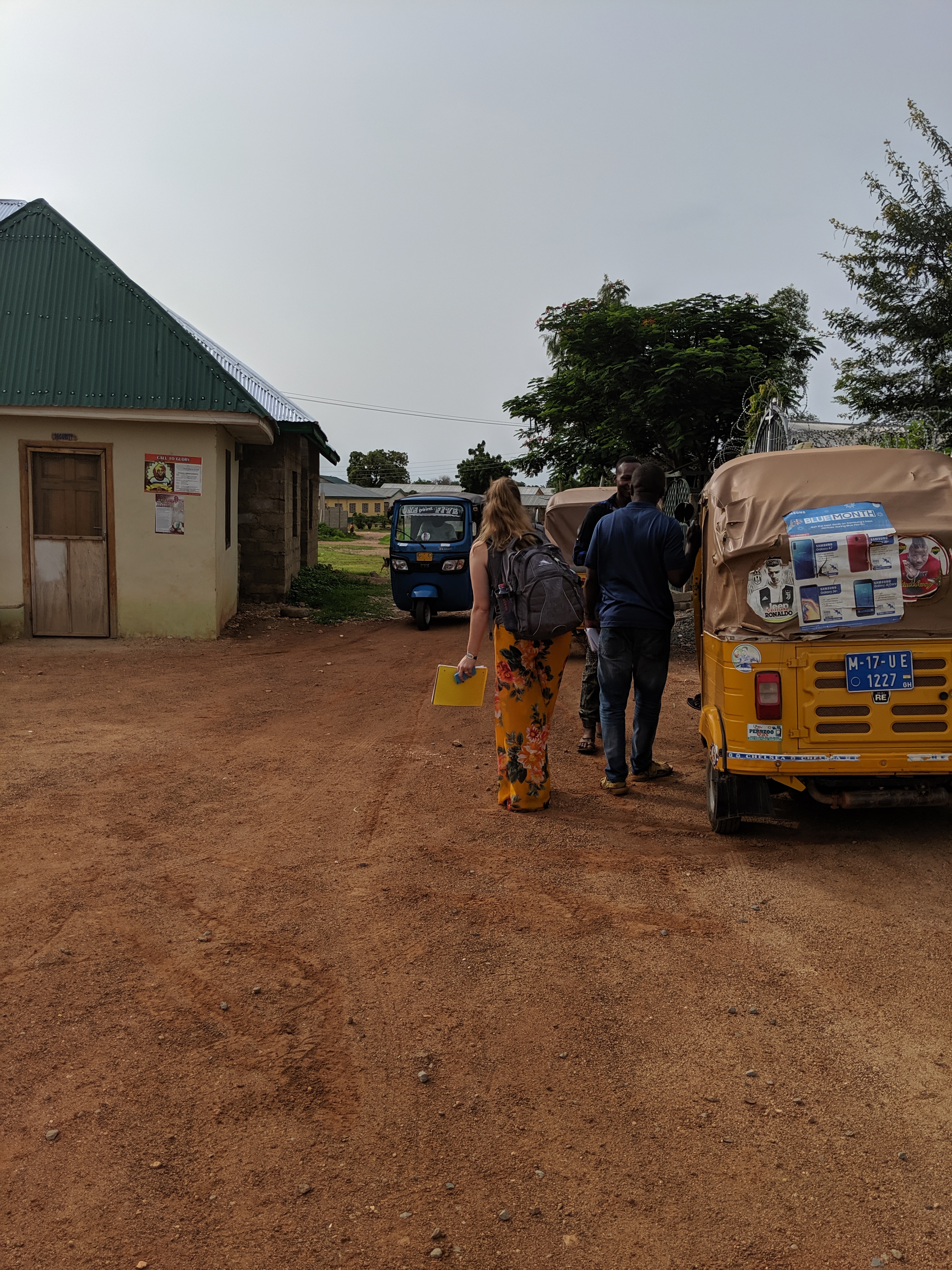
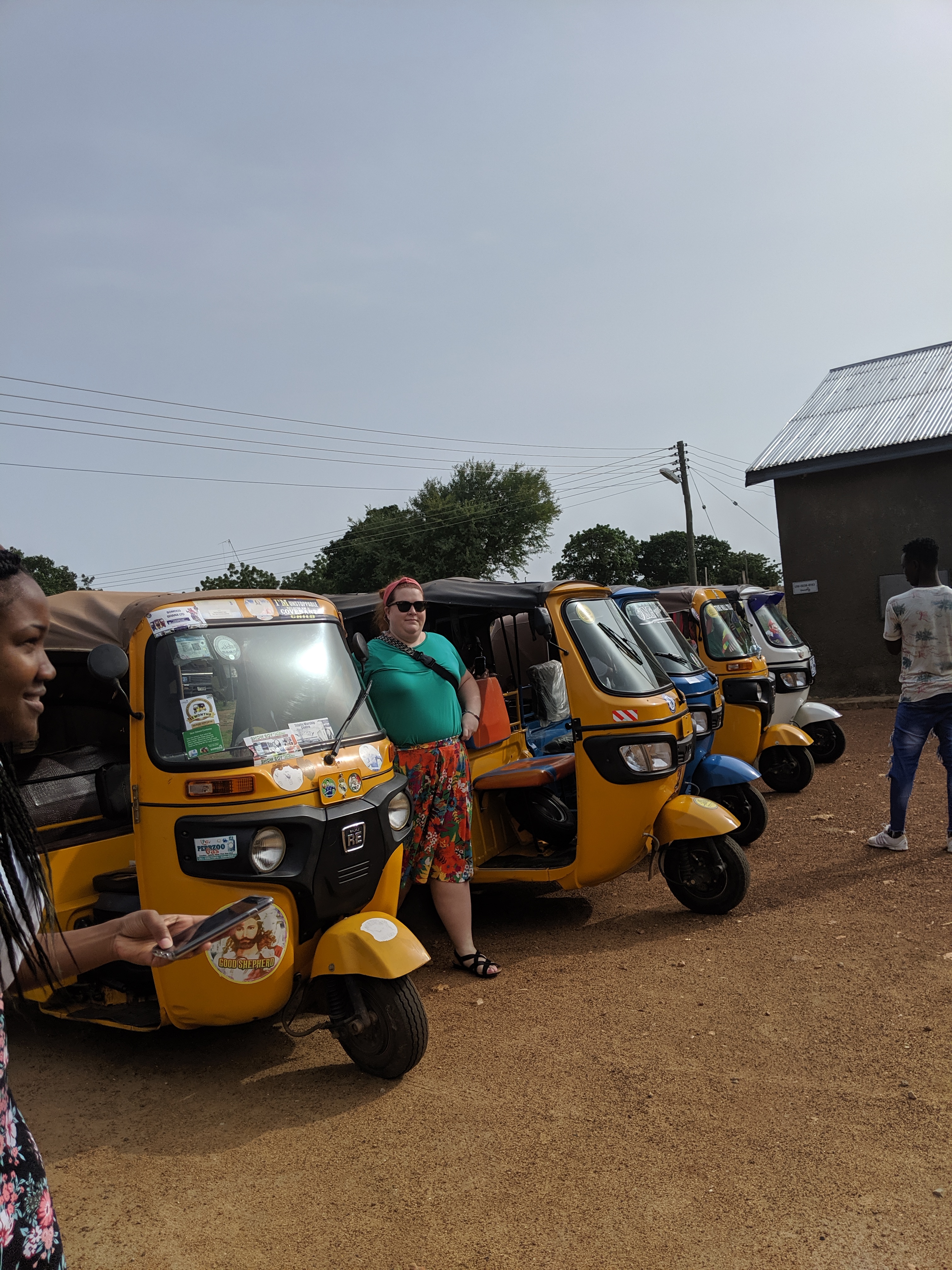
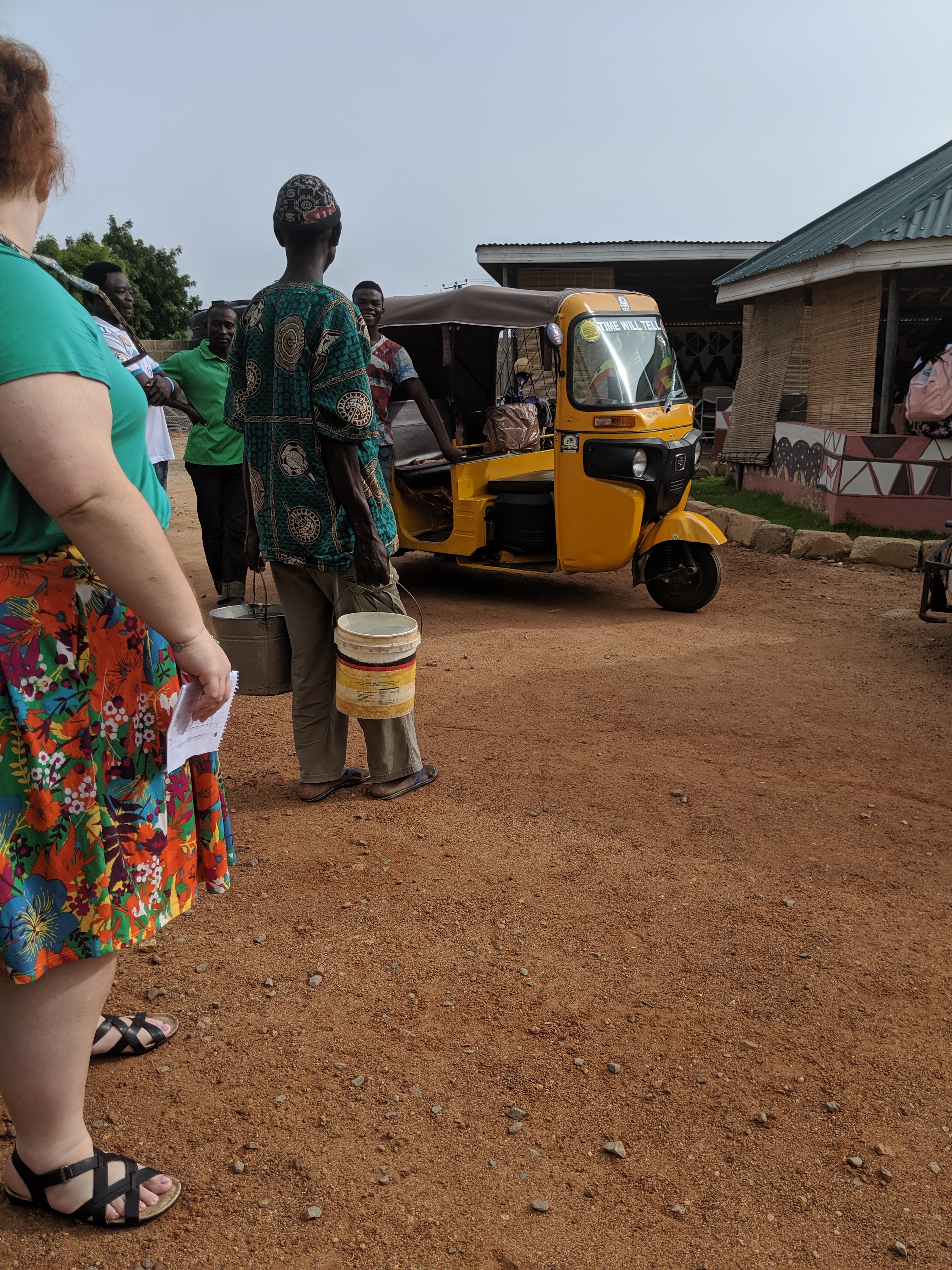
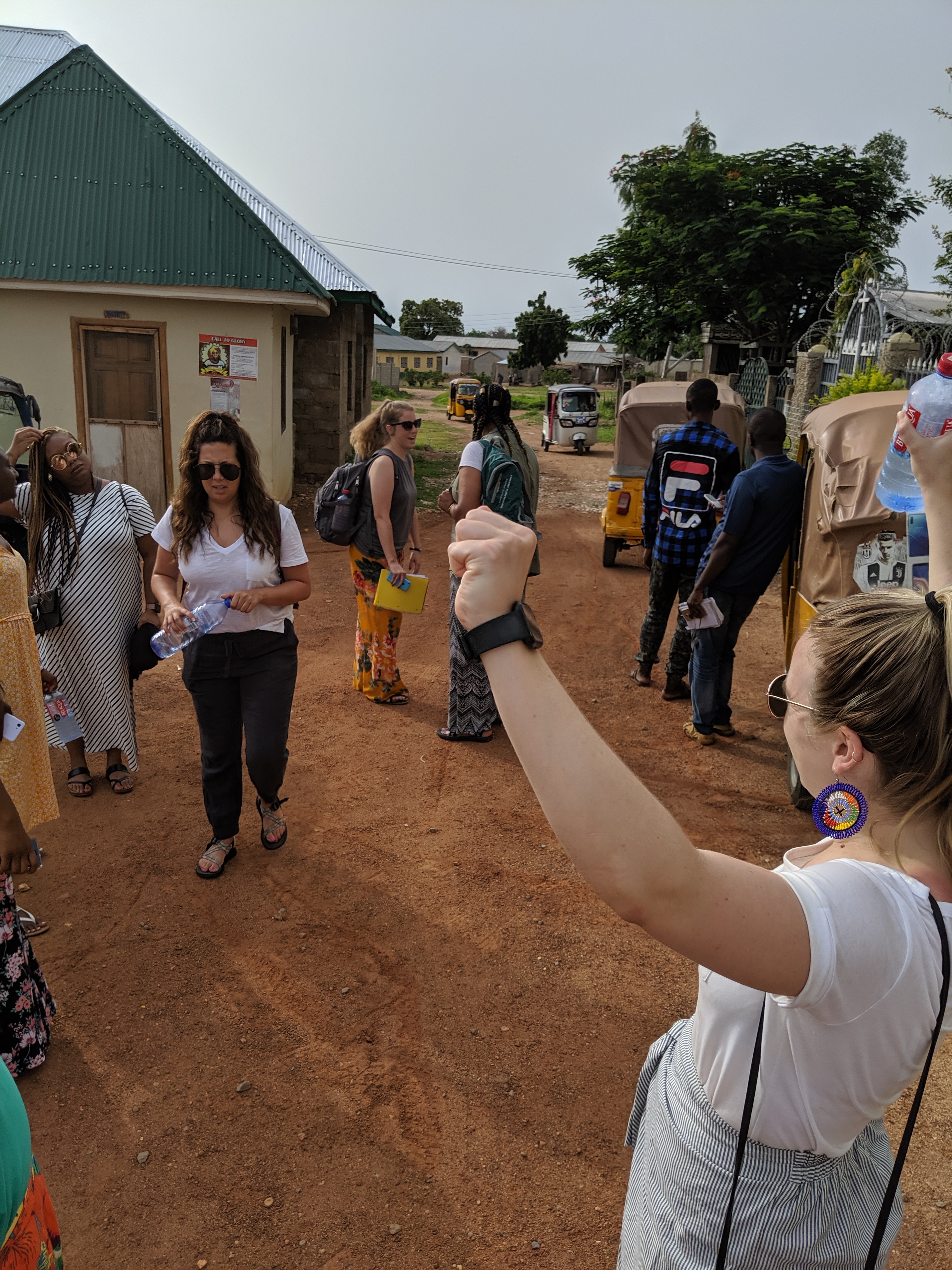
Slept great! The power stayed off all night but Hotel Amazin has a back up generator. We couldn’t use the AC but I could use my ceiling fan. The rain had brought the temperature down by quite a bit, so it was a beautiful night as well as a beautiful morning. During breakfast our team leads just gave us reminders to keep each of our school visits to 15 minutes, and to introduce ourselves to the head teacher when we got there. As we waited after breakfast our can-dos started rolling in. Can-do is my new favorite way to travel. There is a passenger seat in the back, but a single wheel in the front steered by handlebars. They have a top but are open on either side. Our can-do driver, Nelson was ready and waiting for us on time. A few others streamed in a few minutes later. The can-dos all look a bit different. Most of them are yellow, some are different colors. They are all decorated differently, some play music, but all of them are fun!
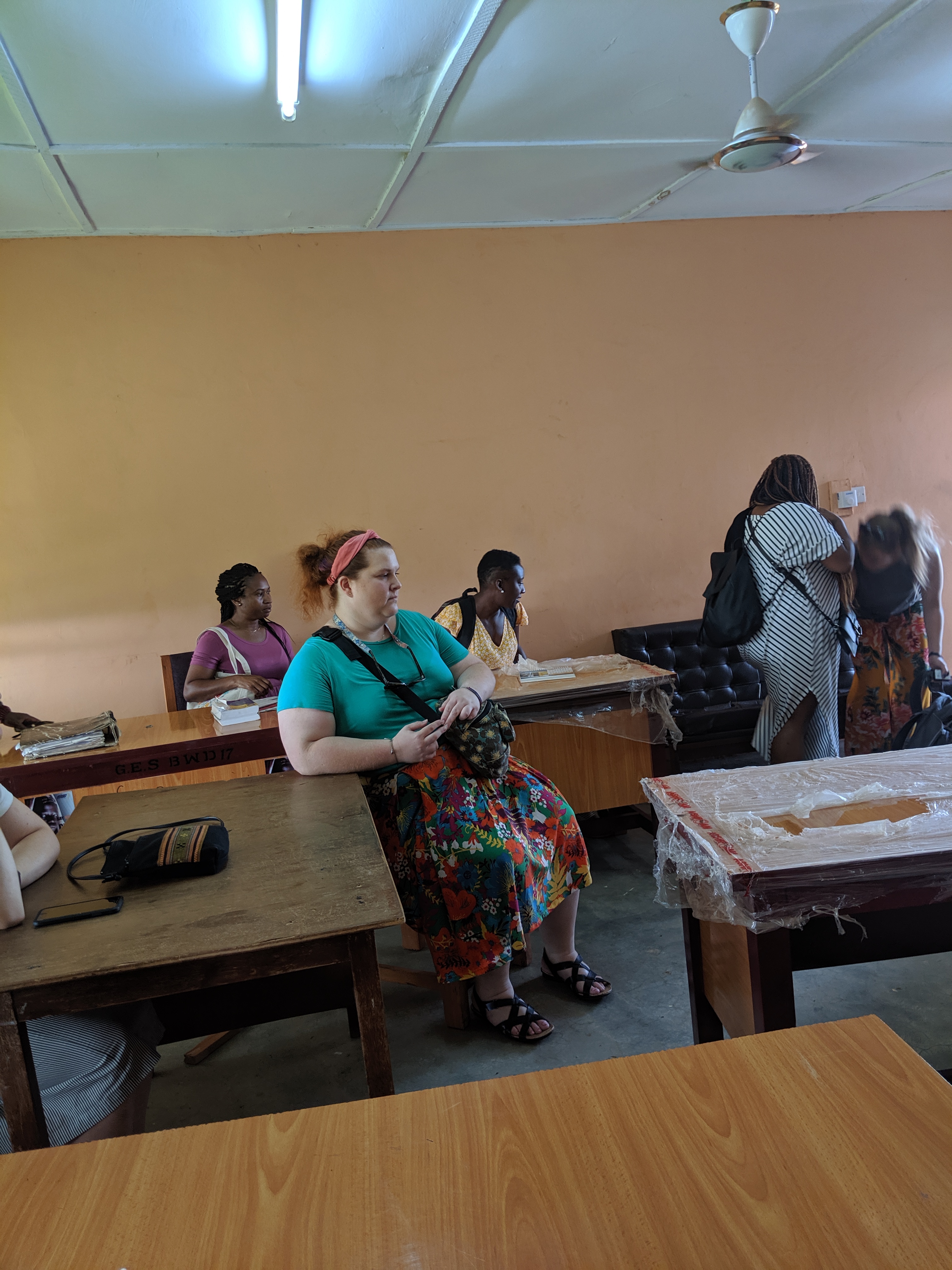
Before we could start visiting our schools, we needed to introduce ourselves to the Ghanian Education Service, or GES. We were all brought into a room filled with desks and chairs, and then the GES members came in after us. We all introduced ourselves and Monty described what we were hoping to achieve while we were in Zebilla. All of the GES members gave us a friendly welcome, and then saw us off, back into our can-dos.
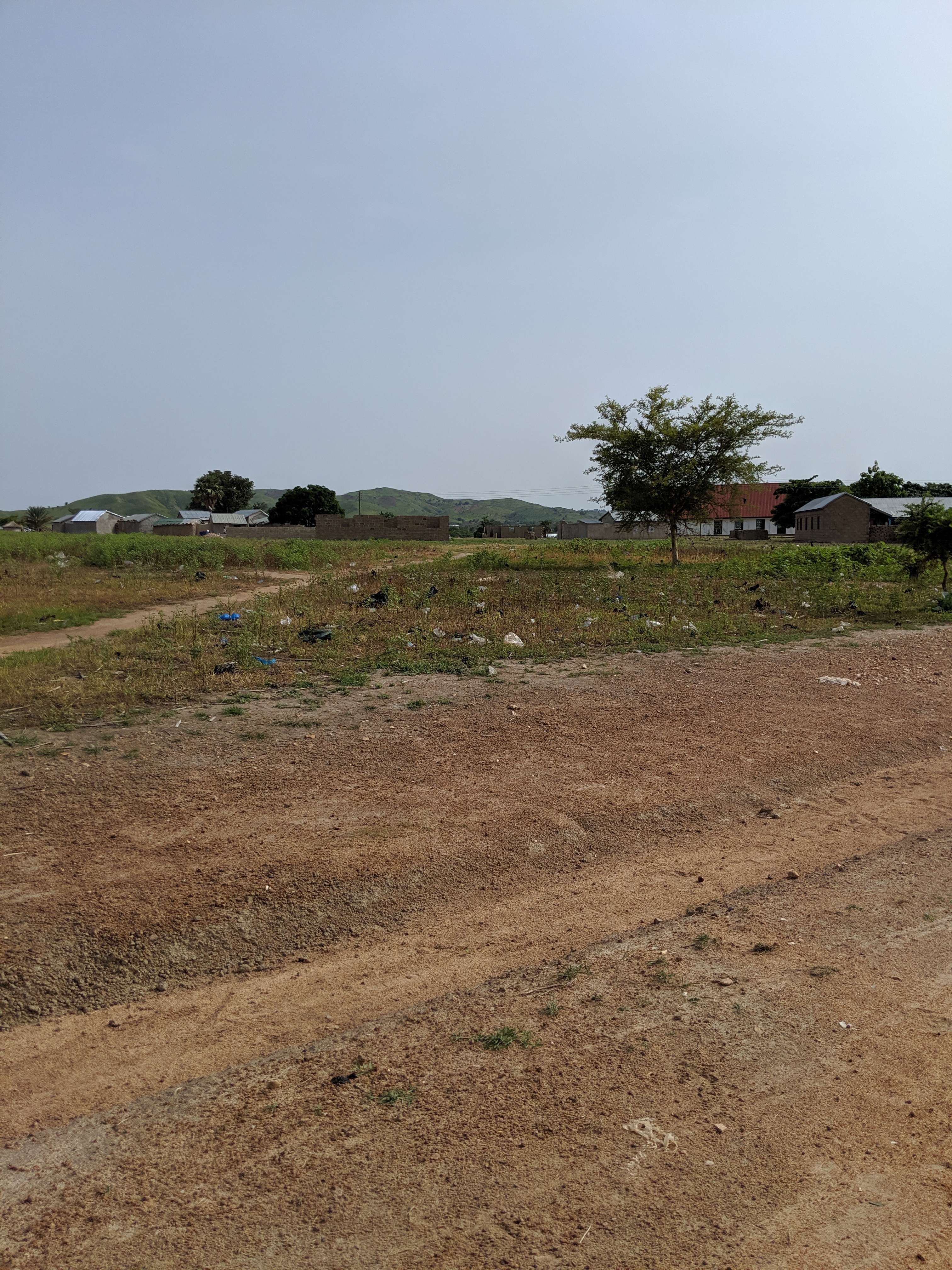
Jasmine and I started at Hariya, one of our Islamic schools. Nelson very kindly dropped us off right in front of the head teacher’s office. A man was inside and informed us the head teacher would be right back. He asked us while we waited what we were bringing to them and how we believed we could help. There was very much a sparkle of humor to his tone. As we began to answer the head teacher, a lovely very put together woman walked back in and we introduced ourselves. The man we were originally speaking with wanted us to go look at all the classes, but we explained we only had 15 minutes and we needed to see the two teachers we were working with, Sumsideen and Vera. Only then did he reveal that he was in fact Sumsideen. Enrollment in was about 50-75 students in the classes that we had time to see. There were paintings on the walls, chalk boards, and some furniture. In many of the rooms there was furniture for some students but others were sitting on the floor or standing around tables. Most of the students had journals and pencils. Sumsideen taught Kg2, meaning his students were mostly five years old, and Vera taught P3 (p stands for primary), meaning most of her students were around 8 years old. We watched in rooms for a few minutes just to get a small understanding of the class dynamics, but then had to leave for our next school.
We arrived next at Hamdaniya, our second Islamic school. At Hamdinaya we met the head teacher and then went to see our two teachers. Sahadu teaches 50 P1 (average age 6) students, and has been a teacher for 21 years. His presence in the classroom, strategies and student engagement were very impressive even in the short time we had to observe him. His colleague, Fulera teaches 44 Kg2 students. Because Fulera teaches the younger students she teaches primarily in L1 (local language), so it was harder for us to understand, but we could see they were practicing capital letters, and that Fulera also had a great presence in her classroom. After we finished at Hamdaniya we were off to Zebilla 1 and Zebilla 2. At Zebilla 1 we met Mercy who teaches 54 P1 students, and Cecilia who teaches 64 P3 students. At Zebilla 2 we met Hawa another Kg2 teacher who has over 120 students, and Flores who teaches P3. Zebilla 1 was the original school and when the classes became far too big to fit all of the students Zebilla 2 was built, but only for the primary grades. The Kg grades are still combined and that is how Hawa ended up with such a large class. There is another teacher who works with her named Moro, but they have the smallest room I observed, and no functional furniture at all. In the back of her room at least 5 feet of space is taken up by tables stacked on top of one another to get them out of the way because there are no chairs. In the older classrooms there were again chairs and desks for some or most students and a few sat on the floor or stood. We took lots of notes, observed as long as we could and then said our goodbyes.
Nelson waited so patiently for us, and was such a wonderful driver. When you ride around in a can-do you really see everything. We saw men riding on their donkey carts, small roadside shops selling fruit, bread and phone cards, probably hundreds of goats, seamstresses working with absolutely beautiful fabric, more motorbikes than goats, and unfortunately for me one cow being butchered. We were one of the last groups back when we returned and everyone was outside chatting excitedly about all that they had seen that day. Jasmine and I started talking about our plans for the first conference day, and prioritizing what we thought would be most helpful after our very brief observations. Most groups did not get to observe teaching. Luckily Nelson was patient and didn’t rush us from each school. Jasmine said she thought she might need a nap so we took a break and agreed to finish planning day one after lunch.
As Jasmine went inside the last pair returned. Eliza and Shelby of course had an adventure to tell us about. One of their schools was apparently very close to the border with Burkina Faso, so they were stopped by an immigration officer. He was very stern with them until he called in their passport numbers, and Eliza said he became much friendlier after that. The officer explained they were being very strict that close to the border because of some of the issues happening in Burkina Faso. We had also heard about these issues from a family staying in our hotel. The family had been in the area for 3 years installing sanitation systems, and had just been joined by two men who had been working on the same mission in Burkina Faso until recently. The immigration officer exchanged WhatsApp info with Eliza and Shelby and sent them on their way. Not much further in their ride they were stopped by “civilian police” for the same reason. They explained their purpose and luckily made it back without any further issues.
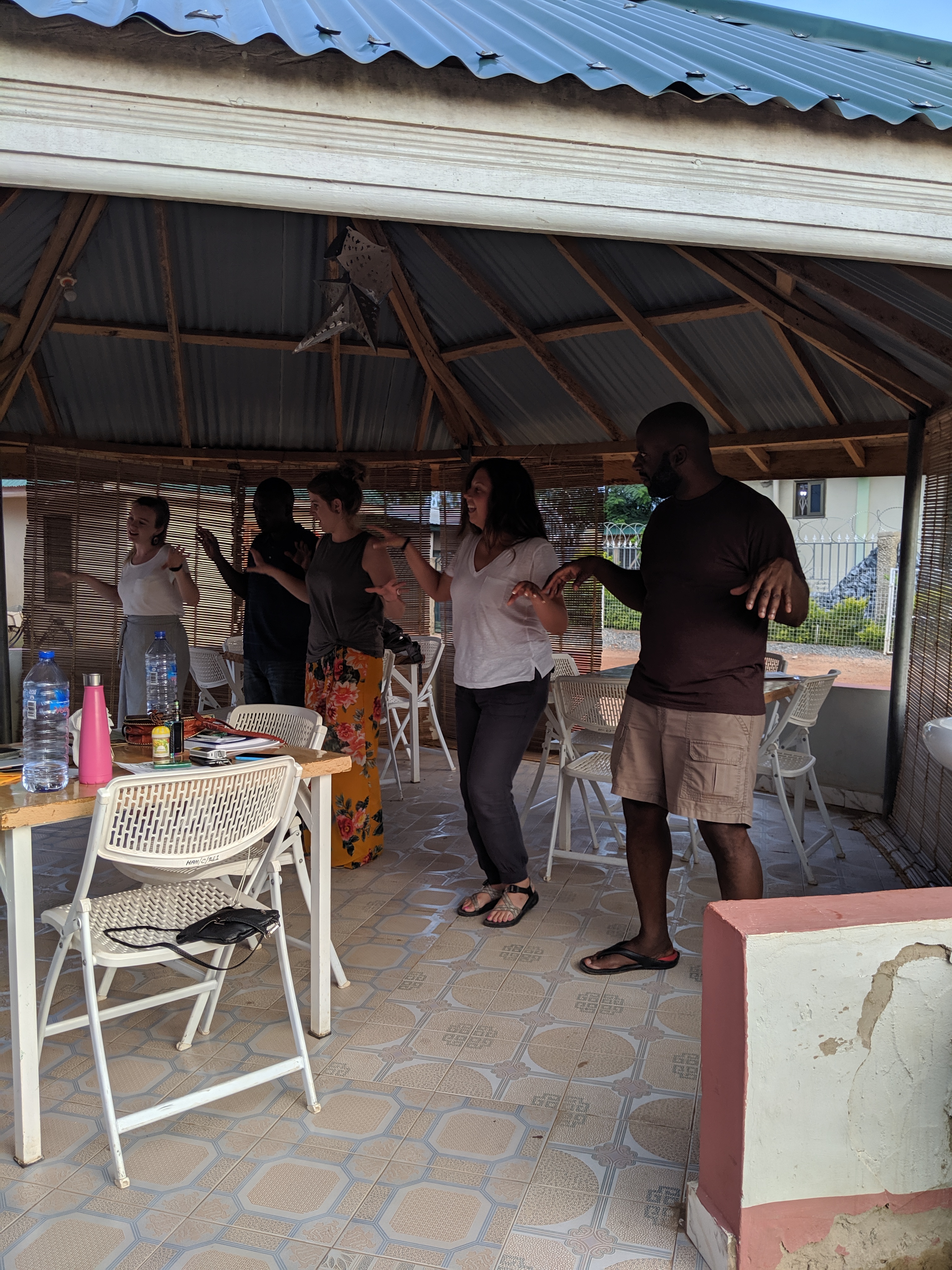
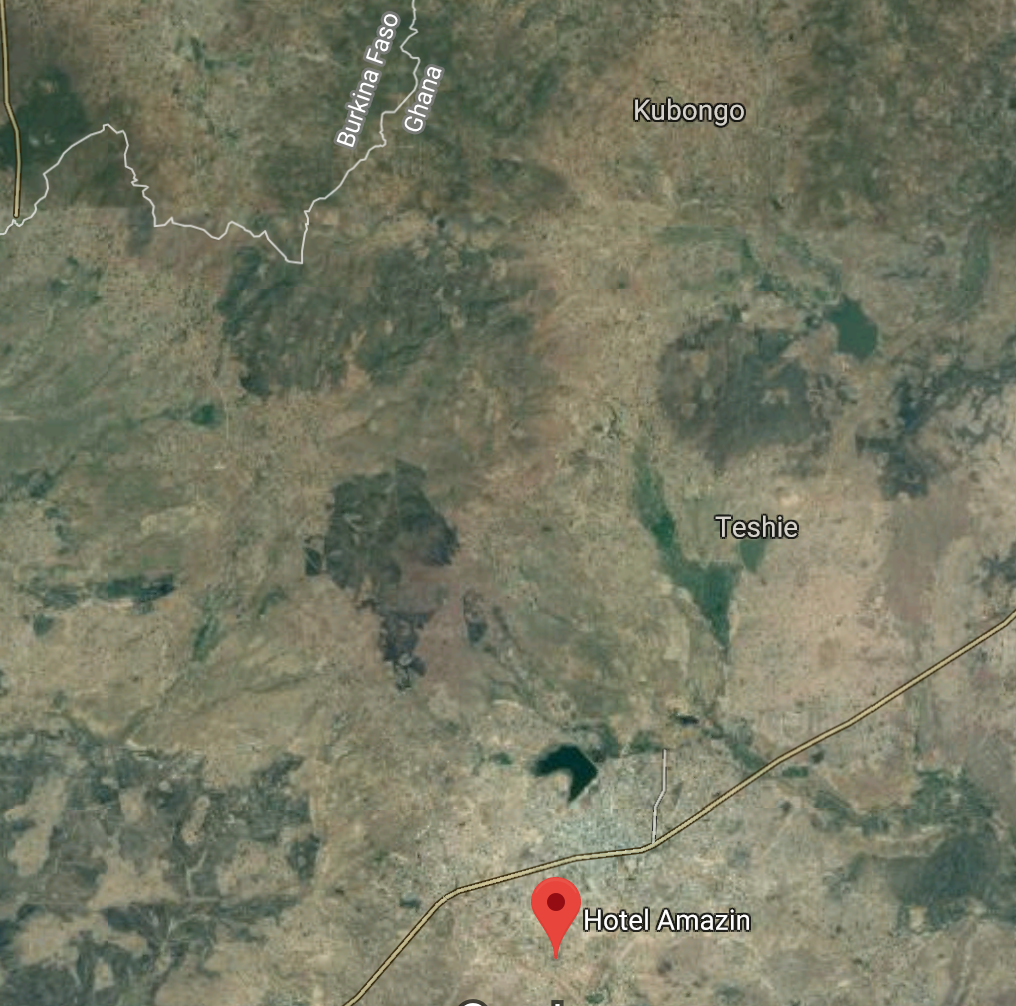
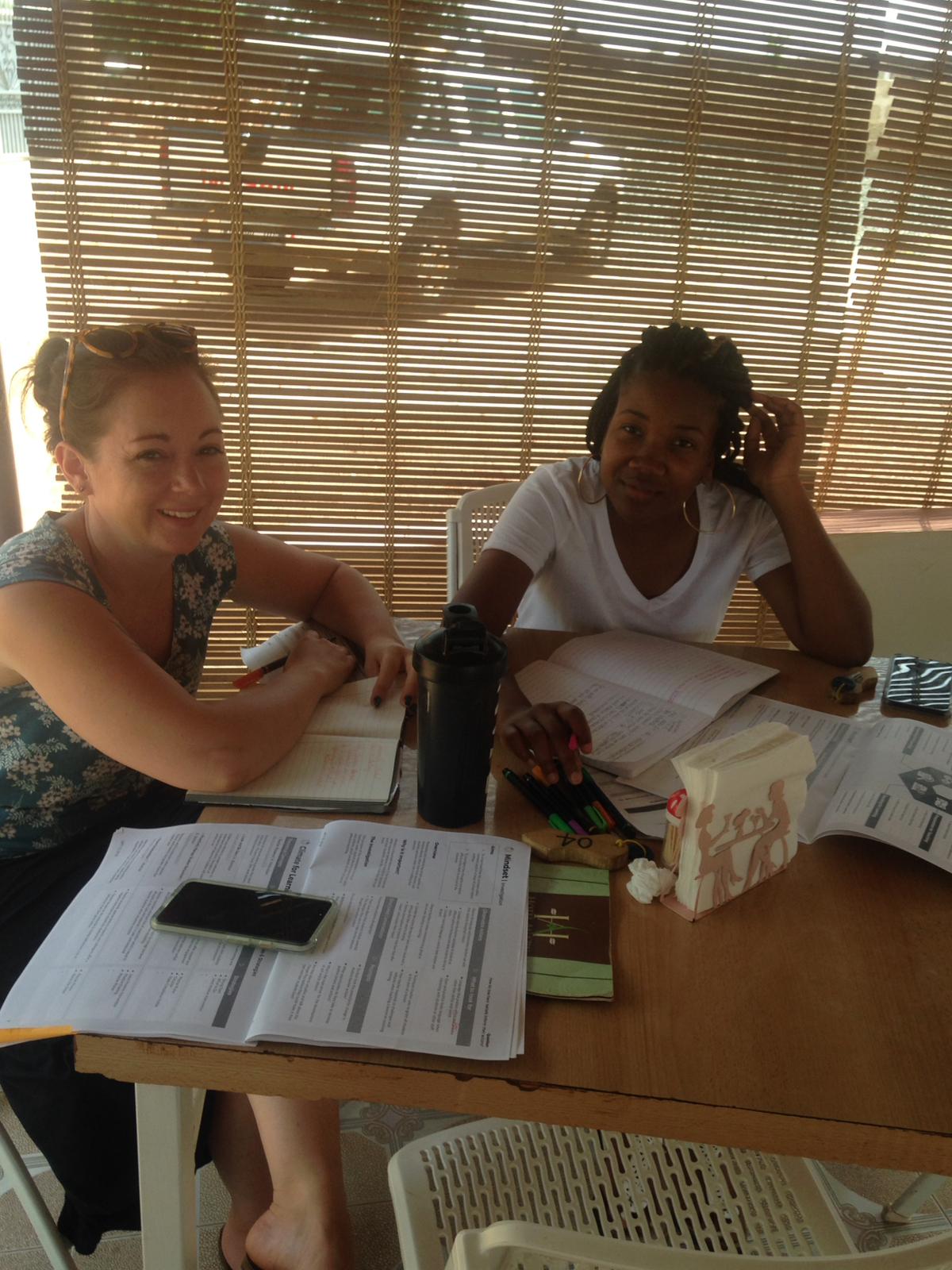
After lunch Jasmine was feeling sick so I planned on my own for a while. I went to work in Shelby’s room. She and Eliza helped me brainstorm and kept me focused. When I was focused and had some good ideas to work with I went outside to get everything written down. Isaac, our Afrikids representative came out and we ended up talking for a while. He introduced me to Mama’s (the hotel owner) oldest and youngest sons. We talked about some of the Afrikids projects. When he and Mandela had originally explained the orphanage they had mentioned abandoned babies. I asked him how the babies typically came to be abandoned. He told me many babies with disabilities, or born looking different are abandoned. He said there are some people who believe if the mother dies during the birth the baby is cursed and they are sometimes abandoned. We also talked about our lives, and then he laughed at me because a puppy had walked into the gazebo and I just wanted to pet it and love it. The dogs near the hotel belong to a family and all wear collars but are treated more like farm animals than as pets. The puppy would come close, but not within a distance where I could touch him. If you know me at all, you know that this was absolute torture. Isaac thought it was hilarious.
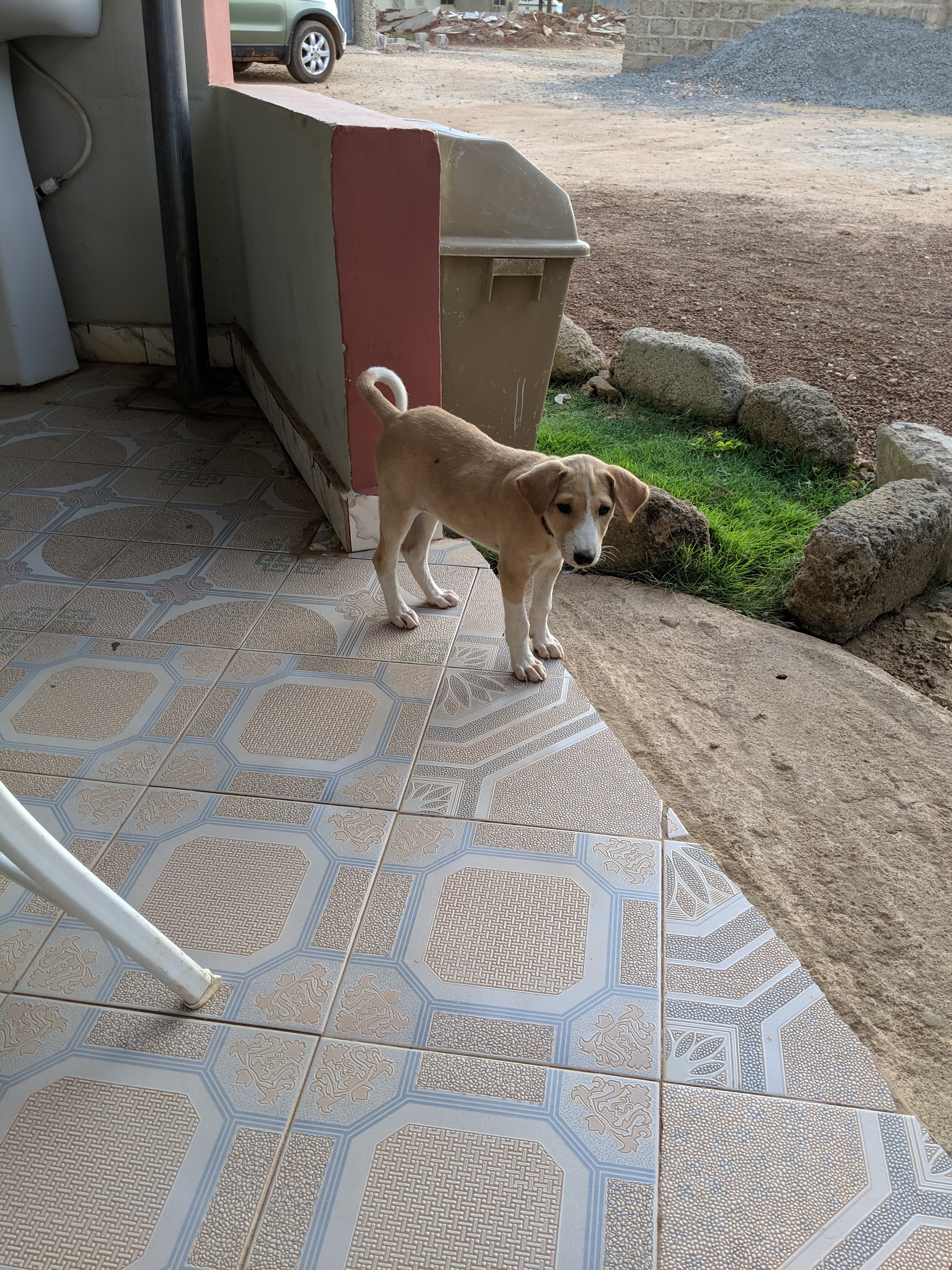
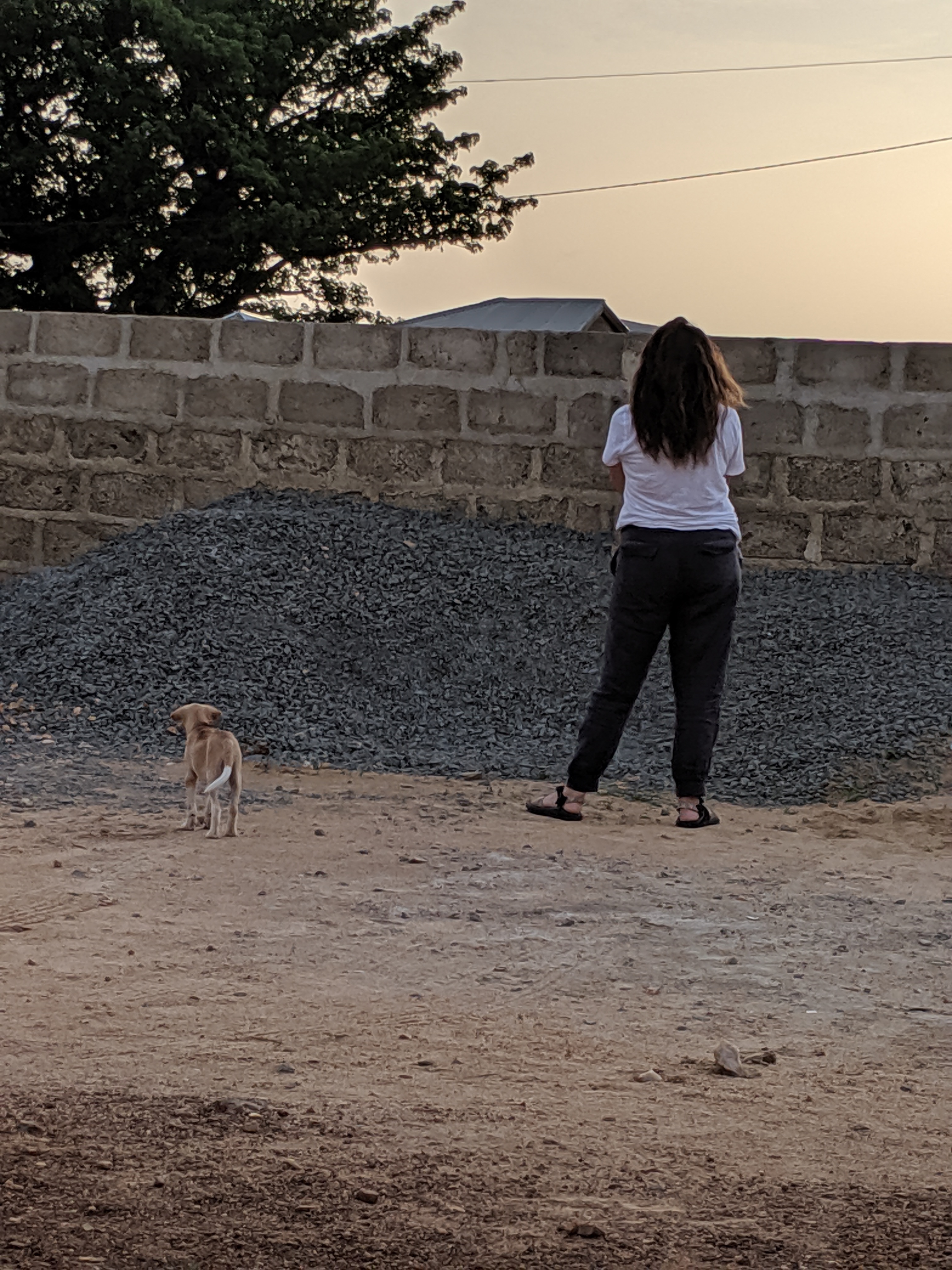
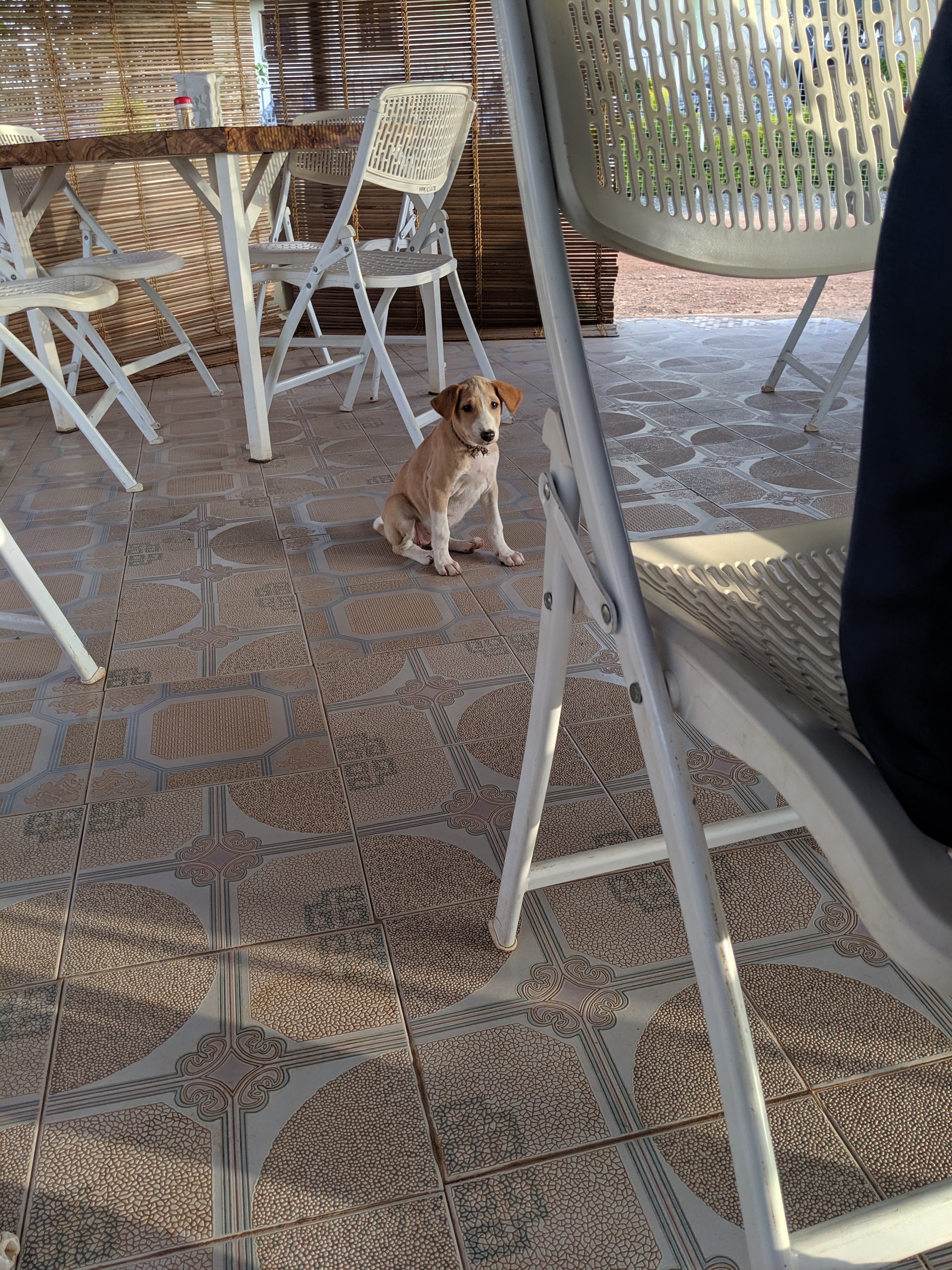
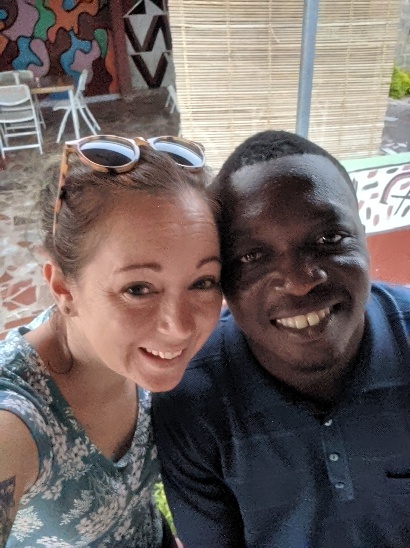
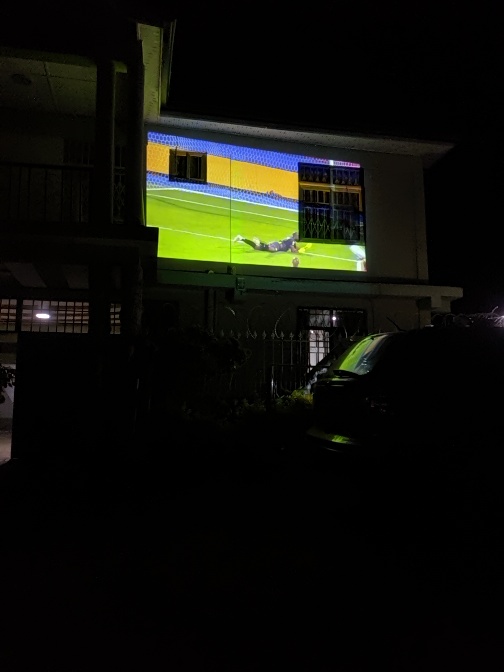
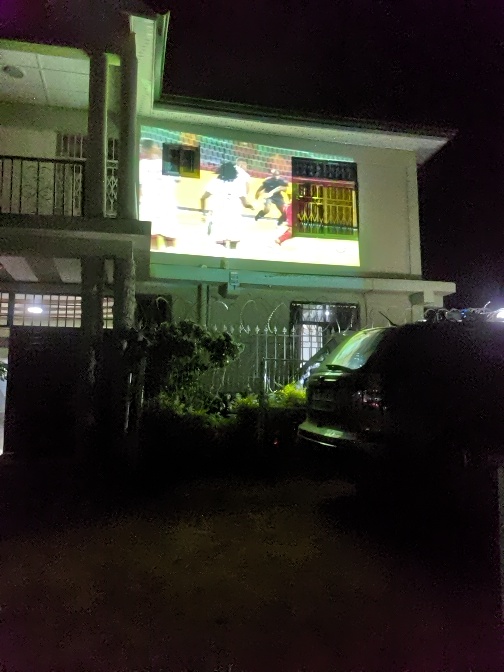
Jasmine came down about 30 minutes before our meeting, and I caught her up on what I had been working on. We planned right up until the team meeting, and then planned for about another hour after dinner. Luckily we finished in time to catch some of the Ghana vs. Benin soccer game that the hotel workers were projecting onto the side of the building. It was the beginning of the African Cup of Nations, so everyone was pretty excited. We moved the chairs out of the gazebo into the parking area and we could watch huge soccer players dive past the hotel windows with great company, and still an occasional puppy wandering by. I stayed out as long as I could, but my worried brain couldn’t stop thinking about our first conference day the next day. I went in to do a little more prep work, and get a good nights sleep. (Ghana won!)

 Adventures of O